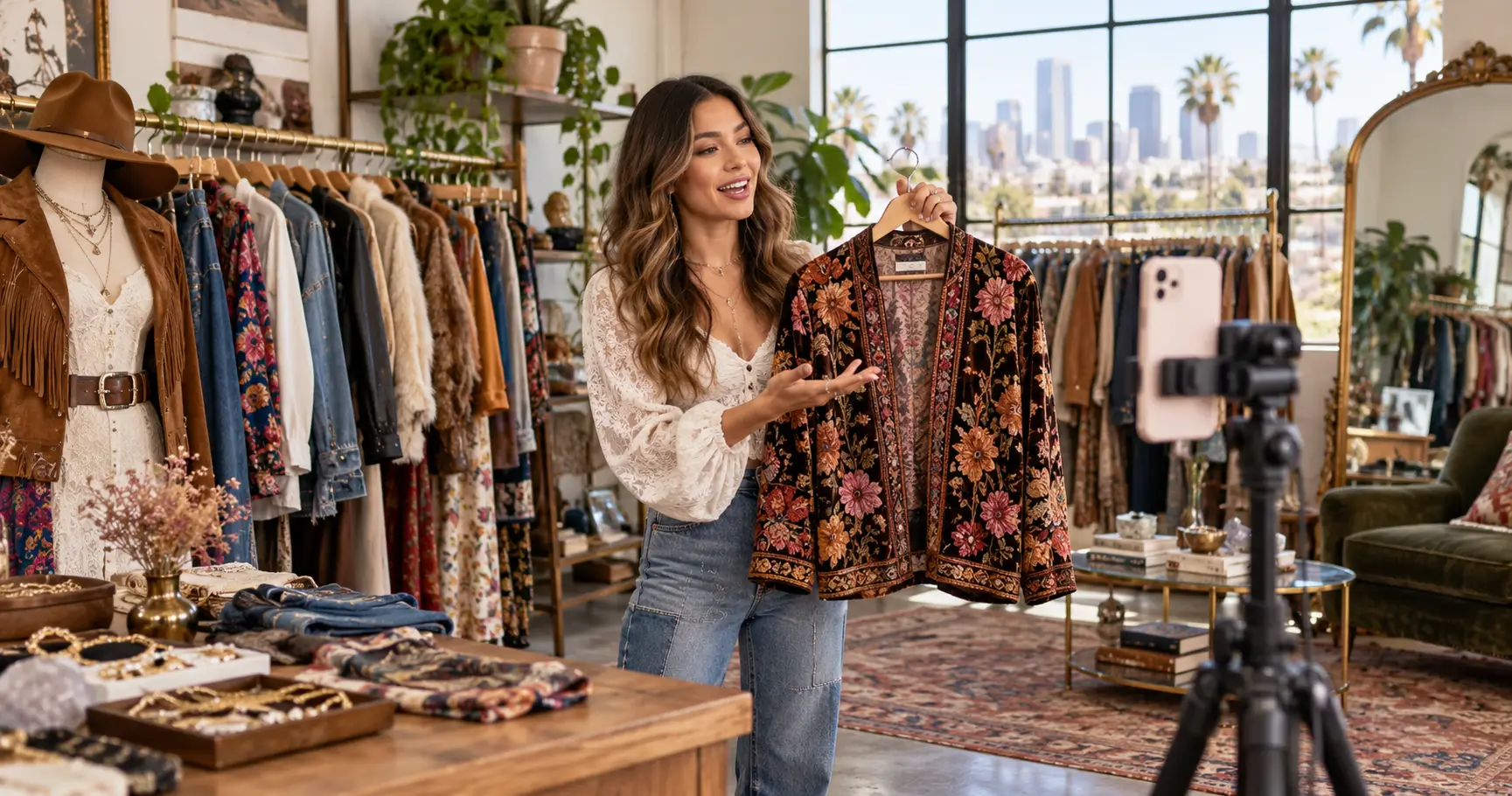
Los Angeles has always had a distinctive relationship with fashion. The city moves easily between luxury labels, flea-market discoveries, independent boutiques, archive pieces, streetwear, and vintage clothing that can feel more personal than anything hanging on a new-season rack. Now another layer is being added to that mix: live shopping.
Instead of scrolling through static product pages, shoppers are increasingly watching sellers present clothing, accessories, collectibles, and one-of-a-kind finds in real time. Viewers can ask questions, see details up close, bid during short auctions, and purchase without leaving the stream. For Los Angeles sellers with deep access to vintage fashion and resale culture, that format is turning the thrill of the in-person hunt into an interactive online experience.
The shift fits naturally with Racked LA’s coverage of Los Angeles shopping and retail, where discovery has always been as important as the purchase itself. Live commerce adds speed, personality, and community to that experience, and in 2026 it is becoming much harder for the fashion world to ignore.
Why Live Shopping Is Having a Moment in Los Angeles
Live shopping combines video, entertainment, conversation, and ecommerce in one place. A seller can hold up a vintage jacket, explain the era and condition, answer a sizing question from the chat, and launch an auction within seconds. That immediacy creates a different energy from ordinary online shopping.
A recent Los Angeles Times report on Culver City-based Whatnot highlighted how local vintage sellers are using livestream commerce to move large volumes of distinctive merchandise while building audiences around their personalities and expertise. The platform has become especially visible in categories where rarity, condition, nostalgia, and storytelling matter.
That is an important combination for LA. The city has an enormous supply of vintage clothing, entertainment memorabilia, designer resale, streetwear, and collectible fashion. It also has sellers who understand how to present those items visually. Live shopping brings those strengths together.
What Makes Live Commerce Different From Regular Online Shopping?
Traditional ecommerce is built around search. A shopper often knows what they want, types it into a search bar, compares several listings, and checks out. Live commerce is much closer to browsing a flea market with a charismatic seller guiding the experience.
On Whatnot, for example, shoppers can participate in timed auctions and purchase items while watching a seller live. The platform’s buyer guide explains that auctions can run for only seconds or for several minutes, creating a fast-moving environment that encourages viewers to pay close attention.
This makes product discovery more spontaneous. A shopper may open a stream looking for a handbag and leave with a 1990s watch, vintage denim, or a designer scarf they did not know they wanted. The appeal is not only the item. It is the feeling of finding it before someone else does.
Vintage Fashion Is a Natural Fit for Live Shopping
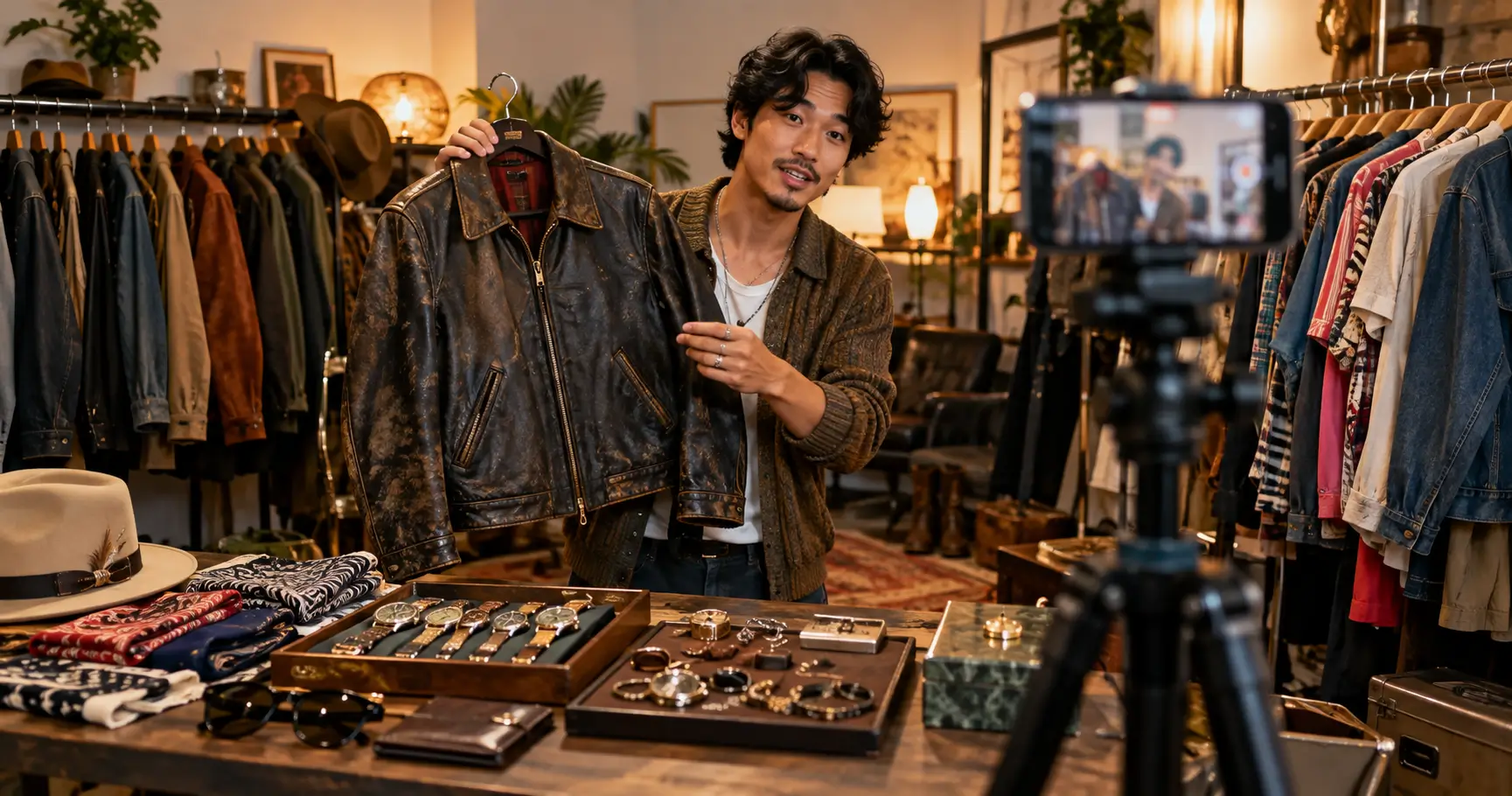
Vintage and secondhand fashion work particularly well in a live format because every item can have a story. Condition, fabric, measurements, era, provenance, and styling possibilities are easier to explain on camera than in a short product description.
The larger resale market is also expanding. The ThredUp 2026 Resale Report projects that the global secondhand apparel market could reach $393 billion by 2030, growing faster than the broader apparel market. That growth is being supported by technology, changing consumer habits, and shoppers who increasingly see secondhand clothing as a first-choice option rather than a compromise.
Los Angeles is already well positioned for that shift. The city’s long-running vintage culture stretches from neighborhood thrift stores and weekend markets to curated designer resale and highly specialized dealers. Readers interested in that side of the city can also explore Racked LA’s fashion and shopping coverage for more style-focused discoveries.
The Thrill of the Hunt Is Moving Onto the Screen
Part of vintage shopping’s appeal has always been uncertainty. You never know exactly what will appear on the next rack, at the next booth, or in the next bin. Live shopping preserves that unpredictability online.
A seller can move rapidly through dozens of pieces, creating a constant stream of new possibilities. Viewers can react in the chat, ask for measurements, request a closer look, or compete for an item in real time. It feels less like browsing a catalog and more like being present at an event.
This is one reason livestream commerce is gaining attention nationally. EMARKETER reported in July 2026 that U.S. livestream retail ecommerce sales were expected to reach $19.8 billion this year, with more than 58 million U.S. consumers projected to make a livestream purchase.
Why Los Angeles Sellers Have an Advantage
LA sellers operate near one of the most diverse fashion ecosystems in the country. Estate sales, costume archives, flea markets, independent designers, warehouse sales, thrift stores, celebrity closets, and resale businesses all contribute to a constantly changing pool of inventory.
Los Angeles sellers can also use the city itself as part of their identity. A stream focused on Y2K fashion from North Hollywood, rare streetwear from Fairfax, or designer resale sourced around West Hollywood already carries a sense of place. For readers interested in exploring those areas offline, Racked LA’s lifestyle and local guides offer another way to discover the neighborhoods behind LA’s retail culture.
Resale Is Becoming More Mainstream, Not More Niche
The growth of live shopping is happening at the same time secondhand fashion is moving further into the mainstream. McKinsey’s State of Fashion 2026 notes that the secondhand fashion and luxury market is expected to grow two to three times faster than the firsthand market through 2027.
That changes how shoppers think about value. A pre-owned piece is no longer automatically viewed as the cheaper alternative. For many buyers, it can be more desirable because it is harder to find, no longer produced, better made, or simply more individual than current-season merchandise.
Social Commerce Is Turning Sellers Into Entertainers
Live shopping also changes the role of the seller. Product knowledge is still important, but presentation matters more than it does on a traditional marketplace. The best hosts explain, style, react, answer questions, and keep the pace moving.
That makes live commerce part retail and part entertainment. It rewards sellers who can create trust and a recognizable point of view. Over time, viewers may return as much for the host as for the inventory.
The National Retail Federation’s 2026 retail outlook emphasizes the growing importance of technology, social-first storytelling, personalization, and new forms of product discovery. Live shopping sits at the intersection of all four.
What Shoppers Should Keep in Mind Before Bidding
The fast pace is part of the fun, but it can also encourage impulsive decisions. Before joining an auction, shoppers should check the item description, condition, measurements, shipping costs, seller history, and platform policies. Vintage sizing can differ from modern sizing, so measurements matter. It also helps to set a maximum price before bidding begins, especially for high-value designer pieces.
Will Live Shopping Replace LA Boutiques and Flea Markets?
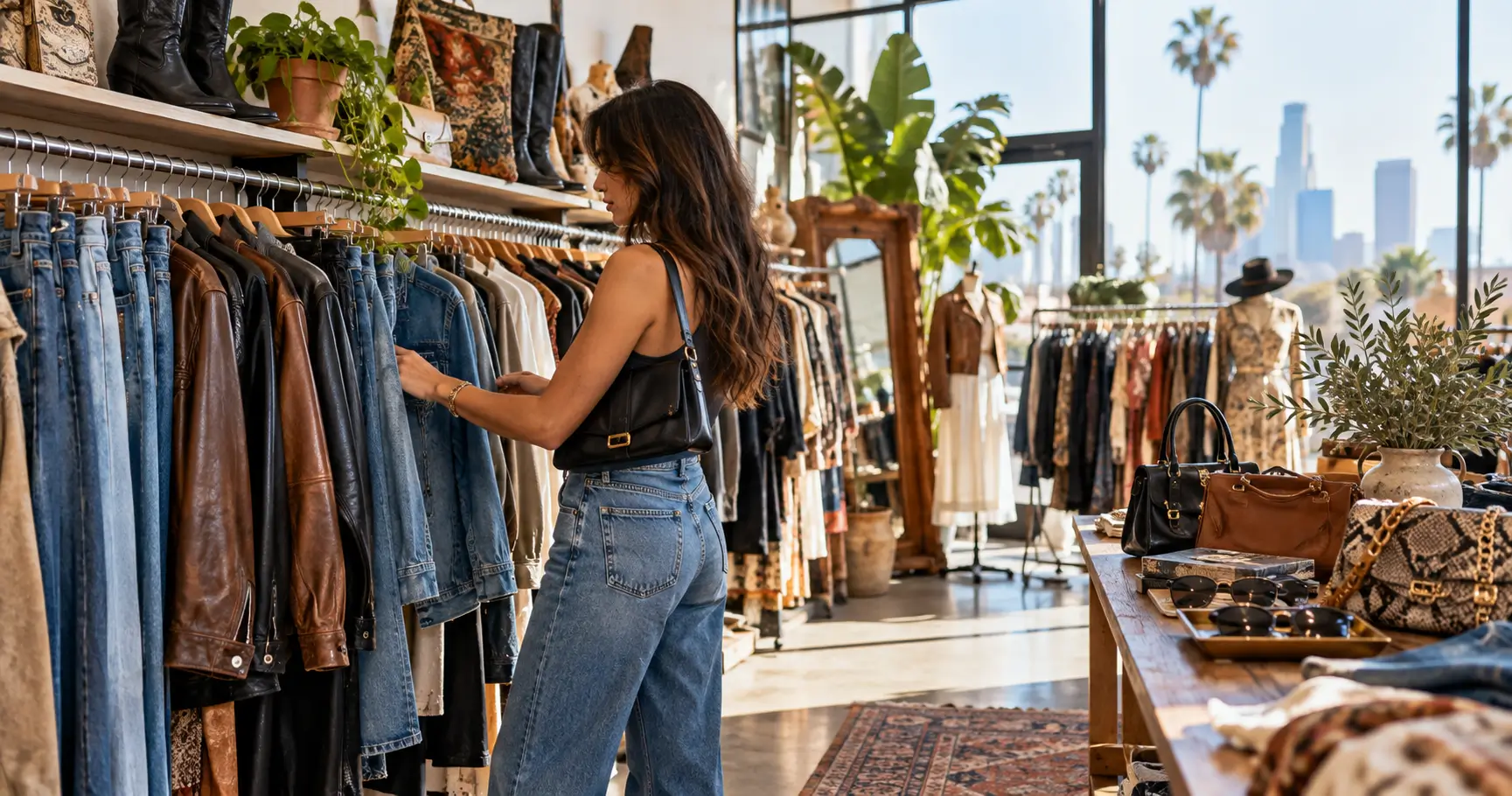
Probably not. In fact, the two experiences may strengthen each other. Physical shopping offers touch, fit, neighborhood atmosphere, and the pleasure of spending an afternoon exploring. Live shopping offers access, speed, community, and the ability to participate from anywhere.
The most interesting future may be hybrid. A vintage dealer can sell at a Los Angeles market on Sunday, host a live show during the week, and use social media to keep shoppers connected between events. That model fits the way LA already shops: across neighborhoods, apps, markets, boutiques, pop-ups, and social platforms.
What Live Shopping Means for the Future of LA Retail
Los Angeles retail has always evolved around discovery. The city embraced concept stores, vintage markets, pop-ups, experiential boutiques, and social-media-driven brands because shoppers here respond to personality and culture as much as convenience.
Live commerce is another step in that evolution. It gives independent sellers a stage, makes niche inventory easier to discover, and turns ecommerce into something more social and immediate.
For shoppers, the result is a new version of an old Los Angeles ritual: searching for something distinctive and hoping to find it before everyone else does.
Explore more emerging shopping, fashion, dining, beauty, and local trends in the Racked LA blog.